










Hearing
Infant Hearing Services
Oak Valley Health is the lead agency for the Tri-Regional Infant Hearing Program. The Hospital partners with other agencies to deliver services across the Tri-Region area.
Toll free: 1-888-703-5437 (select option 4 for Infant Hearing)
Hearing Screening
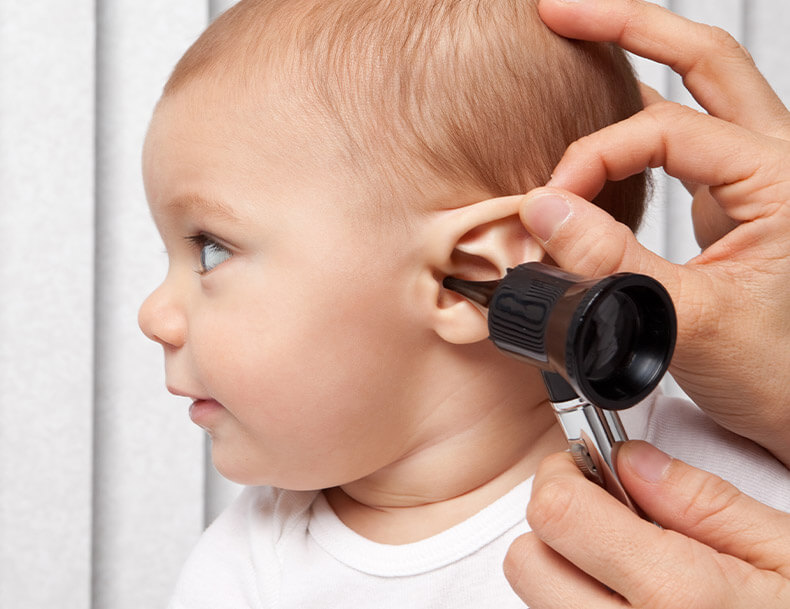
Hearing screens are provided for babies under the age of two months with the goal of identifying permanent hearing differences as early as possible. Early detection and intervention is critical for a child’s language development.
If your baby does not pass the hearing screen, a referral will be made to an Infant Hearing Program audiologist for a full assessment. In collaboration with Newborn Screening Ontario (NSO), a risk factor screen is also completed to help identify babies with certain risk factors affecting childhood hearing to see if we should monitor your baby for any changes in hearing.
This test uses the blood sample that the hospital or midwife collects for the newborn (heel prick) screen. Results are usually ready in one to two weeks. Most babies have negative results, meaning their chance of having one of these risks is lower. You will not be contacted if there is a negative result. If your baby has a positive result, there is a higher chance your baby’s hearing may be affected, and you will be contacted so that follow-up with an audiologist and doctor can be set up.
Hearing screening is available to all Ontario newborns at no charge. This service is provided under the Ontario Infant Hearing Program which is funded by the Ministry of Children, Community and Social Services.
Please note that only permanent residents of Ontario are eligible for Infant Hearing Program services.
Hearing screens are usually available in the following hospitals before the baby is discharged. If the hearing screen did not occur in hospital, families are strongly encouraged to book an appointment at one of our community clinics.
Hearing screens also occur in your local community. Clinic locations are subject to change and may not always be available. Click here to book online or contact 1-888-703-5437 and select option 4 for the Infant Hearing Program
Screening clinics are typically available in:
Audiology
The Tri-Regional Infant Hearing Program contracts with local audiologists to provide hearing assessments for children referred from the program. These audiologists are trained and registered with the Ontario Infant Hearing Program and are provided with the necessary equipment to properly assess and monitor children with hearing differences following the protocols of the program.
If a hearing difference is identified, arrangements are made to refer the infant for a medical assessment.
Family Support Services
Family Support Workers are available to families of children identified with permanent hearing differences to help with the process of accepting the hearing difference and dealing with its implications. They can provide counselling to families, investigate funding options for families needing financial support for hearing aids or other devices and help them to connect with other local services that can help to monitor and encourage their child’s development.
Language Development Services
Some children will require help to properly develop their language skills. Depending on their hearing levels, auditory skills and the language pathway chosen by their parents, children may be eligible to access services through the Preschool Speech and Language program, auditory-verbal therapy or an American Sign Language and Literacy Consultant.
High Risk Monitoring
Newborns with a risk factor affecting hearing should be screened using Automated Auditory Brainstem Response (AABR) technology. A refer result means the baby should have a full hearing assessment.
A limited number of babies will skip the hearing screen and be referred directly for a full audiology assessment.
Depending on the risk factor, some babies will also be eligible for additional high-risk monitoring through the Infant Hearing Program even if they do not have a permanent hearing difference at birth.
Babies who were successfully screened at birth (before two months of age) may be re-referred to the Infant Hearing Program up to the age of six months if they have an acquired, late-onset or progressive risk for a change in their hearing such as syndromes or post-natal infections associated with sensorineural hearing issues, neurodegenerative disorders or significant head trauma. Hearing screening and/or assessment services will be provided for these infants as soon as possible upon referral.
Babies over six months of age should be routed to community audiology services for an assessment with a referral to the Infant Hearing Program only if a permanent hearing difference is identified.
Some of our partners include:
Click Here for a list of the high risk indicators currently included on the Ontario Infant Hearing Program high risk registry.
Who is eligible for High Risk Monitoring?
Infants who:
- Are identified with specific risk factors for late-onset or progressive changes in hearing and
- Have received a “PASS” result on their hearing screen or have no permanent hearing difference at their audiology assessment
What is the High Risk Monitoring Protocol?
This is an evidence-based protocol that varies depending on the risk factor(s) that have been identified.
This surveillance may involve:
- A single visit with an audiologist targeted at 15 to 18 months corrected age
- Multiple assessments with an audiologist over a period of time. The specific number of visits and the timing between them will depend on the specific risk factor identified.
What if my child does not show any change in hearing at the surveillance visit?
Babies who qualify for the single surveillance visit and “pass” are discharged and are no longer monitored by the program. Those who “pass” and are on one of the multiple assessment tracks will be recalled for the next regularly scheduled follow-up until they reach the end of their assessment track when they will be discharged.
What if my child does show a change in hearing on a surveillance visit?
A child who shows a change in hearing will have a complete diagnostic audiology assessment to determine if the change is permanent or not. If there is any permanent change, additional services and referrals would be discussed and initiated.